
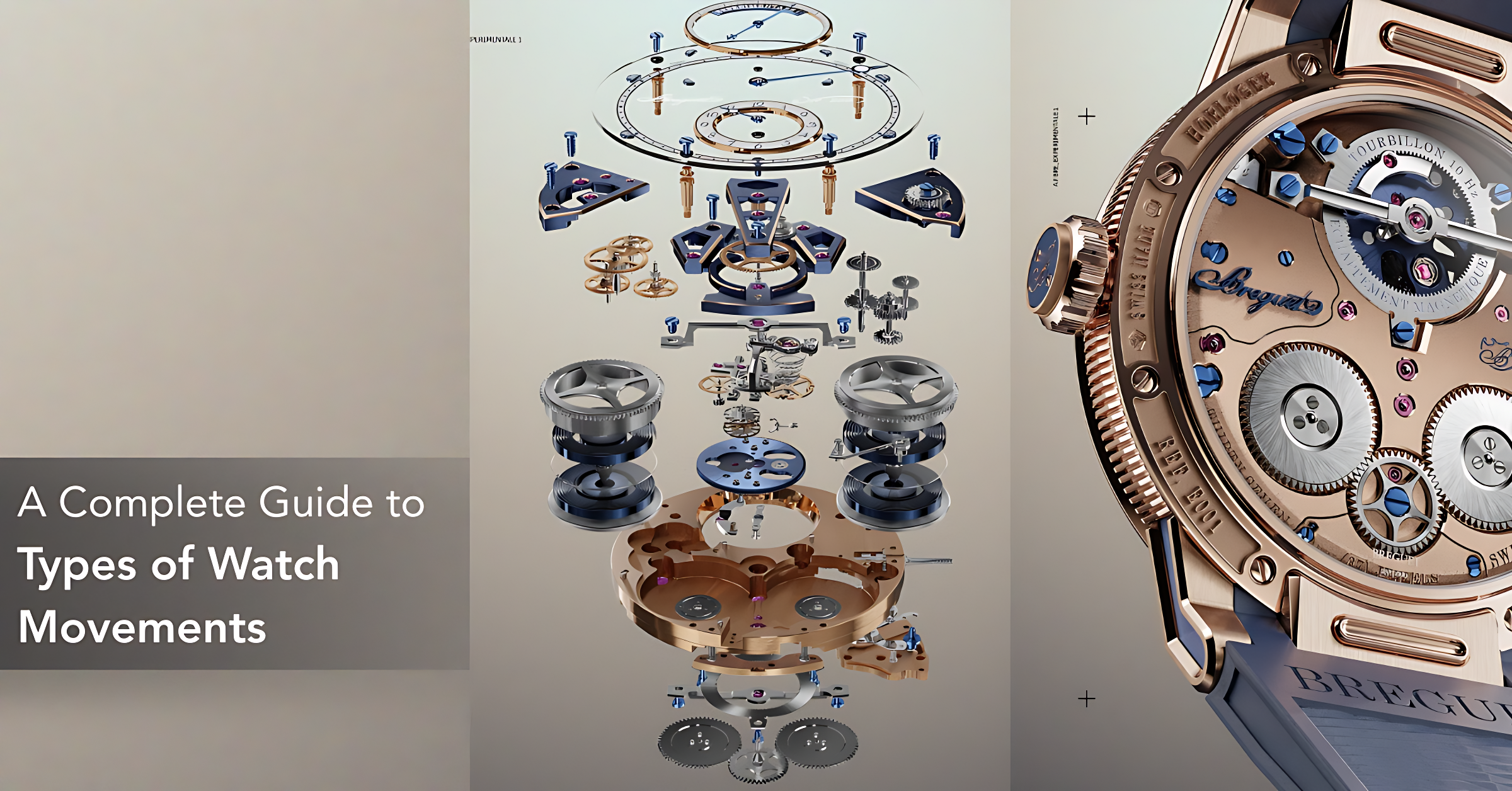
Have you ever paused to consider what powers the intricate universe strapped to your wrist? Every watch tells a story beyond the time it displays. Inside that elegant case lies a movement. This internal mechanism determines how your watch keeps time, and understanding it changes everything about how you see timepieces. A watch becomes more than an accessory when you grasp what makes it tick.
This guide explores major movement types, from centuries-old mechanical marvels to contemporary precision instruments. You’ll discover stunning examples from Breitling, Breguet, Hublot, and Purnell, brands that represent the pinnacle of horological craftsmanship. Each movement type reflects a distinct philosophy of timekeeping, and each deserves your attention.
The Fundamental Split: Quartz vs. Mechanical
A battery sends electricity through a quartz crystal in a quartz watch. This current makes the crystal vibrate at exactly 32,768 times per second. A circuit inside counts these vibrations and drives a stepper motor that moves the hands. The result? Remarkable accuracy with minimal maintenance. Quartz watches revolutionized the industry in the 1970s because they offered affordability and precision that mechanical watches struggled to match.
Quartz movements require little care beyond battery replacements every few years. They keep time within seconds per month rather than seconds per day. For many wearers, this practical advantage makes quartz the sensible choice. However, the mechanical tradition holds a different appeal—one rooted in artistry and human ingenuity rather than electronic precision.
A mechanical movement runs entirely without electricity. Springs and gears replace batteries and circuits. The wearer provides power through winding or movement. This system connects watchmaking to centuries of horological tradition. Craftsmen have refined these mechanisms since the 16th century, and each component requires meticulous attention to function properly.
Mechanical movements split into two categories: hand-wound (manual) and self-winding (automatic). Hand-wound movements require the wearer to turn the crown daily. Automatic movements wind themselves as you move your wrist. Both types represent haute horlogerie—the art of high watchmaking. The brands featured here focus exclusively on these mechanical masterpieces, and the rest of this guide examines them in detail.
The Purest Form: Hand-Wound Mechanical Movements
Here’s more about the hand- wound mechanical movement:
Power Source:
You turn the crown, which winds the mainspring inside the barrel. This spring stores potential energy like a coiled muscle waiting to release. The tighter you wind it, the more energy it holds for powering the watch.
Gear Train:
The mainspring slowly unwinds, releasing energy through a series of gears. Each gear increases the rotational speed while decreasing torque. This transformation prepares the energy for the escapement, which needs rapid, controlled movement.
Escapement:
The escape wheel ticks forward in tiny increments. A pallet fork locks and releases it alternately, creating the familiar tick-tock sound. This component converts continuous rotation into regulated impulses. Without the escapement, the mainspring would unwind in seconds rather than hours.
Balance Wheel:
Impulses from the escapement keep this wheel oscillating back and forth at a constant frequency—typically 28,800 vibrations per hour. Think of it as the watch’s heartbeat. The balance wheel regulates timekeeping with remarkable consistency, and its precision determines the watch’s overall accuracy.
Display:
The gear train connects to hands on the dial, translating all this mechanical activity into something you can read. Hour, minute, and second hands move in perfect synchronization, powered entirely by that coiled spring you wound this morning.
Purnell stands at the absolute peak of contemporary watchmaking. This brand specializes in movements that challenge what seems mechanically possible. Their creations aren’t just timepieces they’re kinetic sculptures that happen to tell time. The Escape Primo in 48mm rose gold exemplifies this approach.
This watch houses a hand-wound mechanical caliber, but calling it simply ‘hand-wound’ understates its complexity. The signature complication here is the Double Triple Tourbillon. A tourbillon rotates the escapement to counter gravity’s effects on timekeeping. Most tourbillons rotate on one axis. Purnell’s creation features two cages, each rotating on three axes simultaneously. Six axes of rotation create a mesmerizing spectacle through the sapphire case.
Hand-chamfered bridges catch light at every angle. Polished bevels gleam against brushed surfaces. Every component receives finishing that takes hundreds of hours to complete. You can observe this architectural beauty through the transparent case back, where the movement reveals its secrets. This represents hand-wound artistry at its zenith—a movement created for pure visual and mechanical appreciation rather than everyday practicality.
The Convenience of Craft: Automatic Movements
An automatic movement builds upon the hand-wound foundation with one crucial addition: the rotor. This weighted, semi-circular piece of metal spins freely on its axis. Every movement of your wrist sets it in motion. As the rotor rotates, it transfers energy to the mainspring through a complex system of gears and pawls.
This self-winding mechanism eliminates the need for daily winding, though you can still wind these watches manually via the crown if needed. The rotor works invisibly throughout your day, keeping the mainspring tensioned as long as you wear the watch. When you take it off, stored energy continues powering the movement for hours or even days.
Power reserve indicates how long a fully wound watch will run without movement. The examples we’ll explore offer reserves ranging from 45 to 70 hours. This means you can set your watch aside for a weekend and still find it ticking on Monday morning. Automatic movements combine mechanical sophistication with practical convenience—a balance that explains their enduring popularity.
Breitling built its reputation creating precision instruments for pilots. The Navitimer embodies this heritage perfectly. This 46mm red gold case with its green dial and iconic slide rule bezel represents functional elegance. Pilots once used that slide rule for critical flight calculations. Today, it serves as a reminder of the watch’s aviation roots.
Inside beats the Breitling Manufacture Caliber B01 a significant achievement. This in-house automatic movement handles chronograph functions with remarkable precision. The chronograph lets you measure elapsed time independently of the main time display. Start, stop, and reset functions operate through pushers flanking the crown.
Column wheel construction distinguishes high-end chronographs from basic ones. This vertical coupling system engages the chronograph smoothly and precisely. The B01 also carries COSC chronometer certification, meaning it passed rigorous testing at the Official Swiss Chronometer Testing Institute. Only movements maintaining accuracy of -4/+6 seconds per day earn this designation.
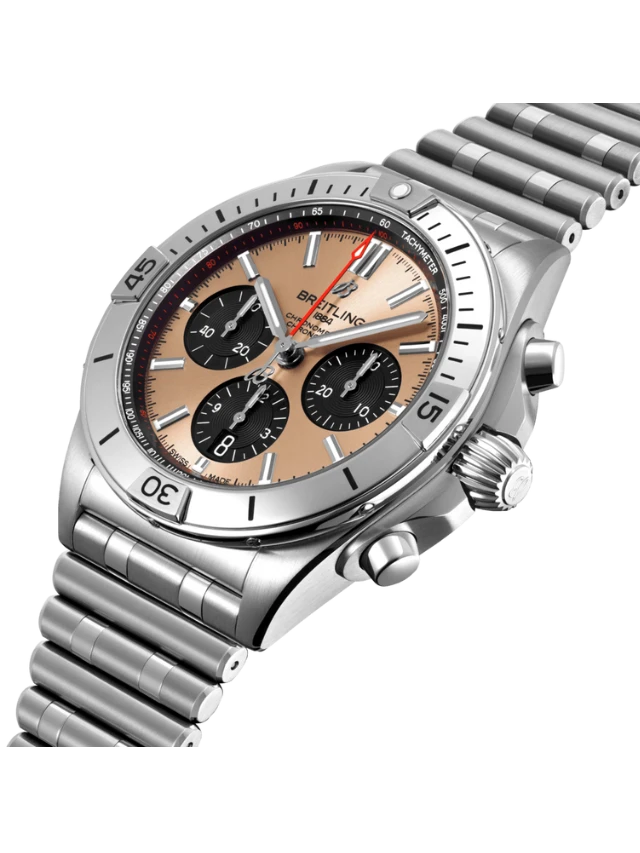
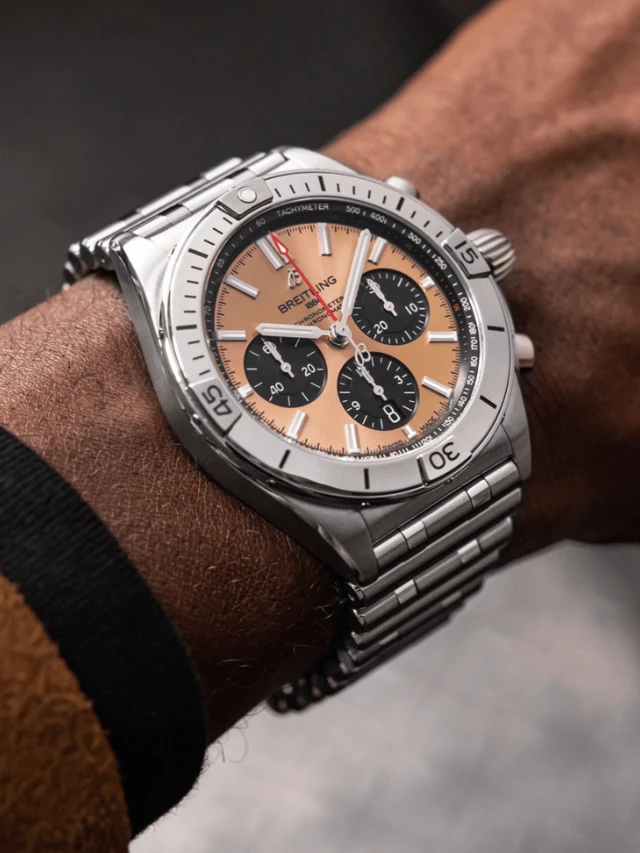
A 70-hour power reserve means you can wear this watch Friday, set it aside until Monday, and never worry about winding. This automatic movement balances robust reliability with sophisticated functionality. Breitling designed it for performance and daily use a tool watch in the finest sense of the term.
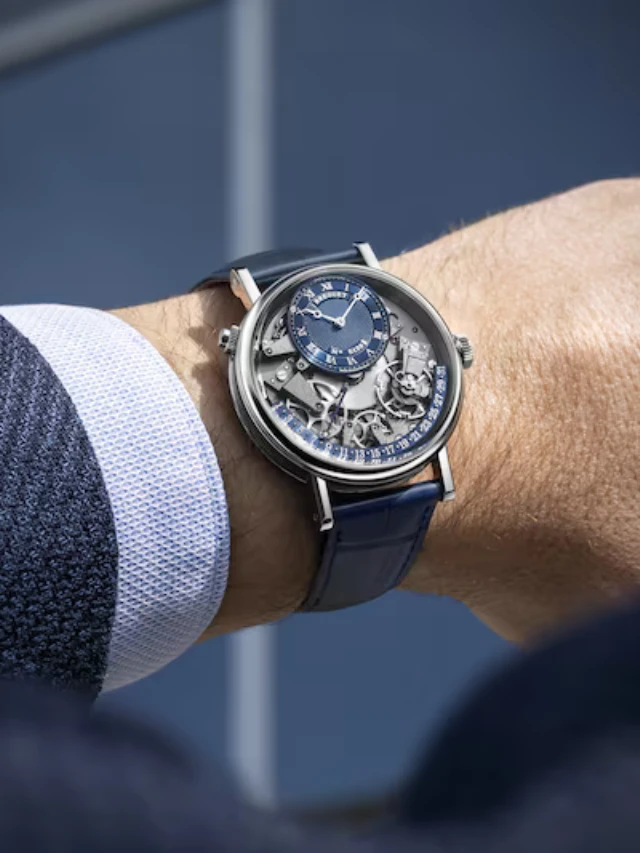
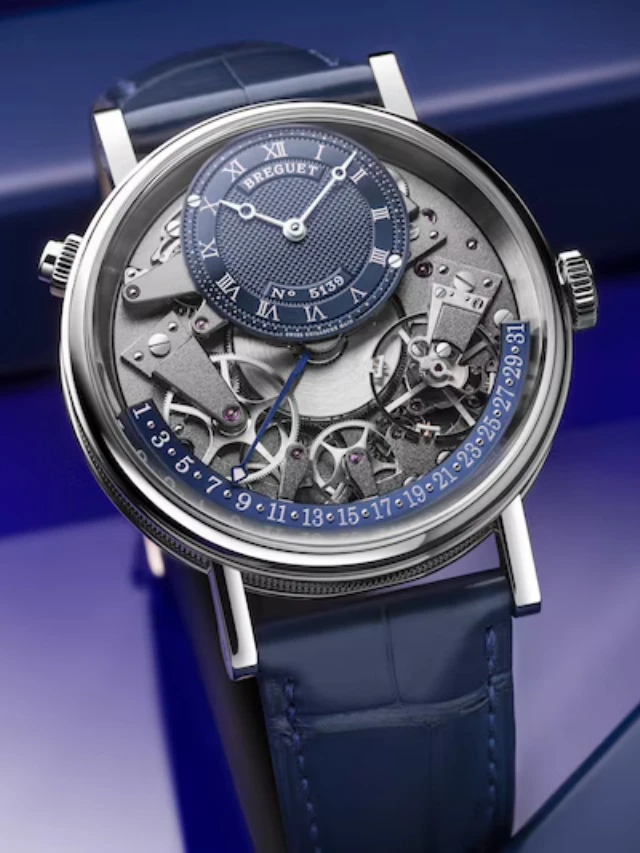
Breguet’s name resonates throughout watchmaking history. Abraham-Louis Breguet invented the tourbillon and pioneered countless other innovations. The brand’s modern creations honor this legacy while serving contemporary tastes. The Marine Royale in 45mm white gold with its black dial and rubber strap combines sporting elegance with technical sophistication.
This self-winding movement features a date display and power reserve indicator visible through the case back. The 45-hour power reserve provides ample autonomy for regular wear. However, the real story here lies in the finishing. Côtes de Genève decoration those distinctive wavy striped patterns—covers the bridges and plates. This traditional technique requires steady hands and exceptional skill.
Look closer at the rotor through the sapphire case back. Hand engraving transforms this functional component into a work of art. Breguet signatures include guilloche patterns and precise anglage on every edge. This automatic movement demonstrates that self-winding mechanisms can receive finishing as meticulous as any hand-wound masterpiece. Breguet proves that convenience and beauty need not compete they can coexist gracefully.

Hublot embraces its ‘Art of Fusion’ philosophy by combining contemporary materials with traditional watchmaking. The Classic Fusion Chronograph in 45mm titanium and King Gold with a green dial and matching strap exemplifies this approach. Titanium offers lightness and durability. King Gold—Hublot’s proprietary alloy adds warmth and luxury. Together, they create visual impact that feels thoroughly modern.
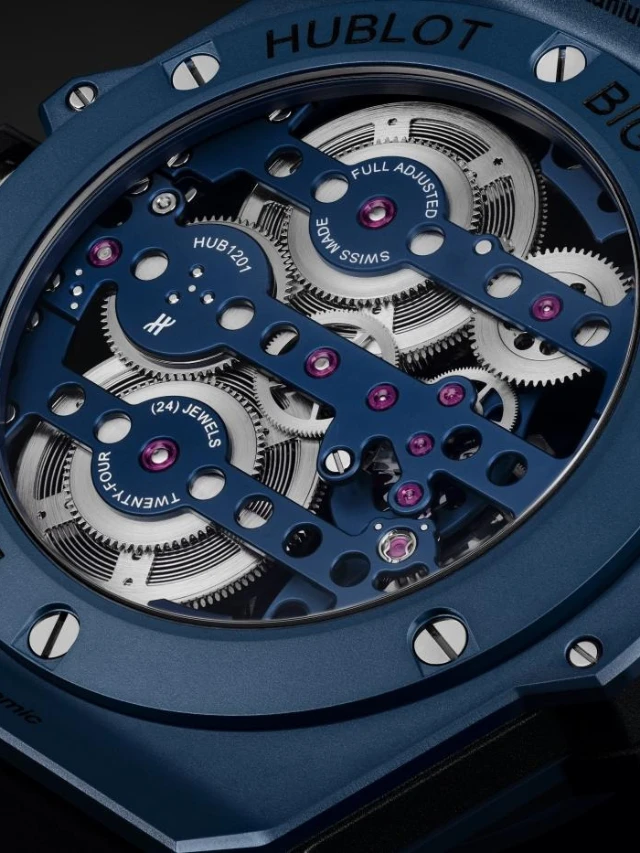
The automatic Caliber HUB1153 powers the chronograph and date functions. A 48-hour power reserve keeps the watch running through a full weekend. Hublot favors an industrial aesthetic, often skeletonizing components to reveal the mechanism’s inner workings. Bridges and the rotor showcase modern finishing techniques that emphasize function and form equally.
This automatic movement proves that traditional mechanics can adopt contemporary expression. Nothing here looks like a 19th-century pocket watch, yet the fundamental principles remain unchanged. Hublot demonstrates that watchmaking evolves without abandoning its mechanical soul. The Classic Fusion shows automatic movements adapting to current tastes while maintaining the craft’s essential character.
Movement Comparison
This table provides a quick reference for comparing the key movements discussed:
| Feature | Purnell Escape Primo | Breitling Navitimer B01 | Breguet Marine Royale |
| Movement Type | Hand-Wound Mechanical | Self-winding Automatic | Self-winding Automatic |
| Complications | Double Triple Tourbillon | Chronograph | Date, Power Reserve |
| Power Reserve | Varies by model | 70 hours | 45 hours |
| Key Feature | Exceptional complexity | COSC-certified chronograph | Hand-engraved finishing |
| Feature | Hublot Classic Fusion |
| Movement Type | Automatic |
| Complications | Chronograph, Date |
| Power Reserve | 48 hours |
| Key Feature | Modern materials & design |
How to Choose the Right Watch Movement for You
A hand-wound movement suits purists and collectors who value the daily winding ritual. This simple act connects you to horological tradition stretching back centuries. You participate directly in powering your watch each morning. Hand-wound pieces like the Purnell Escape Primo prioritize artistic finishing and mechanical complexity over convenience. These watches demand attention and reward it with spectacular visual displays.
Consider hand-wound movements if you appreciate the ceremony of watch ownership. These pieces work best for collectors who rotate their watches frequently or don’t mind daily winding. They represent the oldest tradition of watchmaking in its purest form, unchanged in principle for hundreds of years.
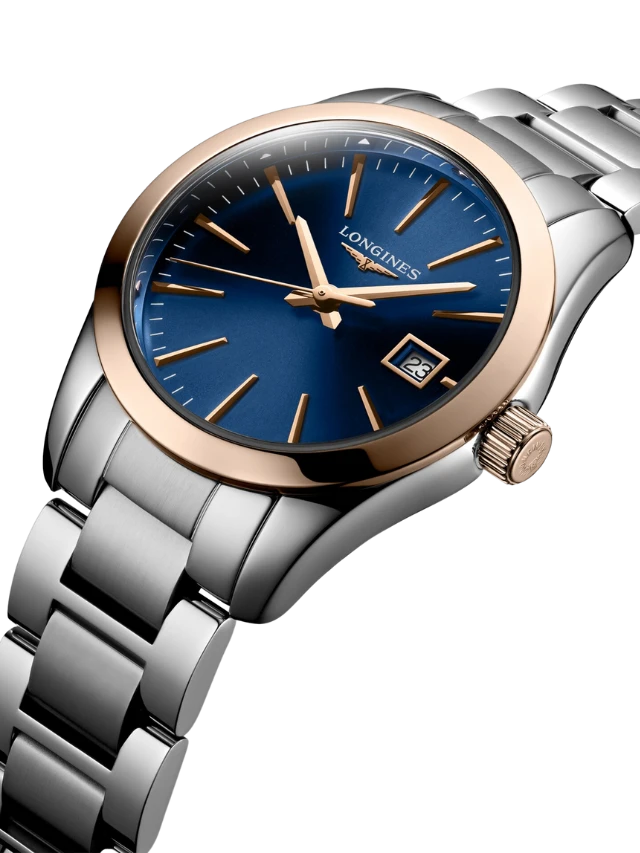
An automatic movement offers luxurious craftsmanship with practical convenience. You simply wear the watch, and it winds itself throughout the day. This makes automatics perfect for regular, daily wear. The Breitling, Breguet, and Hublot examples demonstrate that self-winding mechanisms can achieve the same level of finishing as hand-wound pieces while adding functionality.
Automatic movements suit active lifestyles. Your natural wrist movement keeps them running without conscious effort. If you wear the same watch most days, an automatic becomes wonderfully convenient. Modern power reserves mean you can skip a day or two without the watch stopping. For those who want mechanical artistry without daily maintenance, automatics provide the ideal solution.

Lifestyle:
Active wearers benefit from automatic movements that wind themselves naturally. If you own multiple watches and rotate them frequently, hand-wound pieces or watch winders become necessary considerations. Some collectors enjoy the ritual of winding; others prefer wearing and forgetting.
Aesthetics:
All these examples feature display case backs revealing the movement. However, visual styles vary dramatically. Purnell offers architectural complexity with its tourbillon cages. Breguet presents classical engraving and traditional finishing. Hublot showcases industrial modernity. Choose the aesthetic that resonates with your personal taste.
Budget and Value:
Complex movements command higher prices. Tourbillons represent some of watchmaking’s most expensive complications. Chronographs add functionality and cost. Hand-finishing requires hundreds of hours of skilled labor, which the price reflects. Understanding these factors helps you appreciate why certain watches cost what they do.
Conclusion: The Movement Defines the Watch
This journey took us from fundamental principles of mechanical timekeeping to specific expressions in four extraordinary watches. Understanding watch movements transforms how you perceive timepieces. At Time Avenue, a premier luxury watch store in Mumbai, every watch becomes more than fashion it becomes miniature engineering and wearable art. The movement truly serves as the watch’s soul, determining its character, value, and appeal. By exploring the carefully curated collections at Time Avenue, you can choose the movement whose soul speaks to you, discovering a timepiece that brings satisfaction every time you check the time.
Frequently Asked Questions
1. What is the most accurate type of watch movement?
Quartz movements offer the highest accuracy, typically within seconds per month. Mechanical movements, even COSC-certified chronometers, maintain accuracy of -4/+6 seconds per day. Collectors accept this trade-off because mechanical watches offer artistry and tradition that quartz cannot match.
2. How long does a mechanical watch movement last?
A well-maintained mechanical movement can last generations. Regular servicing every 5-7 years keeps components clean and lubricated. Many vintage watches from the 1950s still run perfectly today. Quality mechanical movements outlive their owners when properly cared for.
3. Do automatic watches need to be worn every day?
Automatic watches don’t require daily wear. Power reserves of 45-70 hours mean they continue running for days after you remove them. If a watch stops, simply wind it manually or wear it for a few hours to restart the rotor. Watch winders maintain multiple automatics for collectors who rotate their pieces frequently.
4. What is a tourbillon and why is it special?
A tourbillon rotates the escapement to counter gravity’s effects on timekeeping. Abraham-Louis Breguet invented this complication in 1795 for pocket watches kept in vertical positions. Modern wristwatches benefit less from tourbillons functionally, but they represent extraordinary mechanical achievement and visual spectacle.
5. Is a hand-wound or automatic movement better?
Neither type surpasses the other objectively. Hand-wound movements appeal to purists who enjoy the winding ritual and often feature more visible finishing. Automatic movements offer convenience for daily wear while achieving comparable finishing quality. Your lifestyle and preferences determine which suits you better.
6. What does COSC certification mean?
COSC (Contrôle Officiel Suisse des Chronomètres) certifies watches meeting strict accuracy standards. The Official Swiss Chronometer Testing Institute tests each movement for 15 days across five positions and three temperatures. Only movements maintaining -4/+6 seconds per day accuracy earn chronometer certification, indicating exceptional precision.